
Dear Friends:
Buckle Up! There is a lot to report in this week’s legislative update. Tax breaks, judicial reform, and fixing the oversight of charter schools top the list.
Small Biz Tax Break
 South Carolina small business owners may soon see a reduction in property taxes on office furniture, machinery, and appliances. These companies are the backbone of SC’s economy and the lifeblood of local communities. They represent 99% of businesses in SC.
This week, the House of Representatives approved legislation (H.5006) to exempt the first $10,000 of personal property value from tax bills. It is a significant burden for small businesses to pay annual property taxes on items such as desks and computers, which are already subject to sales tax. To qualify for this exemption, a business must have fewer than 100 full-time employees or less than $10 million in annual sales. Approximately 97% of businesses fall under this threshold. If enacted, the exemption could result in a $9 million loss of tax revenue for SC counties, affecting local budgets.
Judicial Selection Overhaul
The SC House approved a major overhaul of the state’s judicial selection system this week. The legislation (H.4755) shifts significant influence on judicial screening from legislators to the governor’s office.
Removing lawmakers from the screening panel addresses long-standing criticism that attorney-legislators help pick judges who may later hear their cases. Shifting appointment authority to the governor moves SC closer to the model used in most states, where the executive plays the lead role in judicial nominations, helping to balance institutional power rather than concentrating it in one branch.
Currently, judge candidates are vetted by a 12-member Judicial Merit Selection Commission comprising legislators and a small number of gubernatorial appointees. Candidates who pass screening are then elected by the full General Assembly. The newly passed proposal would bar legislators from serving on the panel and replace them with eight licensed attorneys and four law-enforcement professionals, all appointed by the governor. The bill also adds disclosure requirements and public-hearing standards to increase transparency and limit influence by current or recently retired lawmakers.
The House approved the measure 86-25. The Senate must still take up the proposal, and its prospects there remain uncertain.
Judicial reform has been a recurring issue at the Statehouse. Last year, a bill became law that modestly reduced the commission’s legislative dominance, following criticism that attorney-legislators had undue sway over judges who might later hear their cases. This bill brings more needed reform.
Magistrate Judge Reform
Cued up for debate on the House floor is another judicial bill (H.3530) that would overhaul the selection of the state’s more than 300 magistrate judges by giving the governor authority, with Senate consent, to appoint them to four-year terms and requiring candidates to hold law degrees and meet residency standards. Gov. McMaster has endorsed that proposal, saying it would boost confidence in the courts. Senate leaders say they are open to considering reforms, though no final outcome is guaranteed.
Oversight of Charter Schools
 A bill to enhance oversight of SC charter schools passed the Senate unanimously this week and now moves to the House. The proposal (S.454) follows a House panel’s questioning of the Charter Institute at Erskine about a recent Legislative Audit Council report, whose recommendations are largely included in the bill:
- State approval required for new charter authorizers
- Mandatory annual board training
- Transparency and conflict-of-interest rules for authorizers and management companies, similar to traditional school districts
- Restrictions on schools switching authorizers to evade accountability
- Closure of schools failing state standards for three consecutive years
Sen. Greg Hembree stated that the aim is to strengthen accountability, not to target specific institutions, and emphasized that charter schools should meet the same performance standards as traditional public schools.
Checking Professor Tenure
The Tenure Accountability Bill (H.4761) promotes transparency and fairness in higher education by requiring annual performance evaluations for all public university faculty members and regular post-tenure reviews for tenured professors. This legislation guarantees that taxpayer-funded educators will continue meeting measurable professional standards throughout their careers. Every South Carolinian deserves confidence that public universities operate with integrity and uphold high expectations.
I filed a similar bill last session that drew a lot of negative response (as expected) from national education writers but privately drew praise from SC university officials who want to rein in tenure. I joined Rep. Shannon Erickson as a primary sponsor of the bill currently under consideration.
Making the Grade
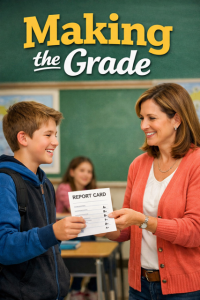 A bill advancing in the House would ban school districts from giving students automatic minimum grades instead of the scores they earn. The legislation (H.5073) was passed unanimously out of the House Education Committee. It ensures grades reflect what students actually earn, not provide shortcuts that hurt long-term success. Parents deserve an honest picture of how their child is performing. This bill restores integrity to GPAs and graduation data, reinforces strong academic standards, and helps ensure our children are truly prepared for college, careers, and real life. Real accountability today creates real opportunity tomorrow.
Housing Help
Legislation to remove eviction records from public view after five years advanced in a House Judiciary panel. Old eviction filings prevent residents from securing housing. More than a dozen citizens shared their housing challenges during testimony. One citizen described how his family’s 2018 eviction filing—after requesting repairs—led to years of housing instability and still affects them today. The bill (H.4270) would delete eviction filings from public indexes five years after the last filing or final ruling. The proposal has bipartisan backing support.
Legislative Spotlight
Criminal Profiteering
No doubt you have heard stories about the burglar who was injured when he fell through the roof of a business he was breaking into and later sued the business for damages. It’s called criminal profiteering.
This week, I filed the first-in-the-nation legislation to block people engaged in illegal or wrongful conduct from collecting damages for injuries or losses connected to that behavior. The bill, titled the “Eliminate Criminal Profiteering Act” (H.5160), aims to restrict certain lawsuits and tighten liability standards in negligence cases. Under the bill, anyone who participates in unlawful or intentional misconduct could not sue for damages related to events stemming from that conduct, even if no criminal charges were filed.
The legislation also limits claims in auto-accident cases by people unlawfully in our country (illegal aliens), barring them from recovering general damages or lost wages unless they can prove lawful status.
In addition, the measure narrows when property owners can be held liable for crimes committed by third parties on their premises. Owners would not be responsible unless they had recent knowledge of similar incidents and failed to take reasonable precautions.
This bill prevents criminals from profiting through civil courts and protects businesses from unfair liability. Critics argue it could restrict access to justice for injured individuals and shift legal advantages toward defendants.
I have already heard from folks in the business sector who enthusiastically support this bill.
Legislative Briefs
Juvenile Crime Reform
The House Judiciary Committee advanced a comprehensive juvenile crime reform package, the Juvenile Crime Reform Bills (H.5117, H.5120, H.5121) to protect families, hold violent offenders accountable, and keep communities safe. These measures ensure due process when considering whether serious juvenile offenders should be transferred to adult court, improve communication between schools and law enforcement when serious offenses occur, and invest in prevention programs such as mentoring, job training, recreation, and family support services. This balanced approach prioritizes both accountability and prevention. Public safety comes first, and serious crimes will carry serious consequences, regardless of age.
Tougher Penalties for Child Exploitation
This week, a Senate Judiciary panel unanimously voted in favor of legislation aimed at increasing prison sentences for individuals involved in creating or sharing images of child sexual abuse. The proposed bill seeks to increase minimum sentences for offenses involving the sale, purchase, filming, or production of such videos. This legislative push follows the recent sentencing of former Rep. RJ May, who received 17.5 years in federal prison for distributing child sex abuse videos.
College Athletes & the NIL
A fast-moving bill that would allow SC public colleges to keep individual athletes’ pay confidential is advancing as a related lawsuit remains on hold. The Senate Education Committee sent the measure to the floor on Wednesday. The House passed it 111-2 earlier. The proposal follows a public-records lawsuit against USC seeking details on Name, Image, and Likeness (NIL) payments. A judge paused the case pending legislative action. Under the bill, schools would disclose only total athlete compensation, not individual deals. Universities say secrecy protects student privacy and recruiting competitiveness.
Online Sports Betting
A Senate panel has scheduled a hearing on the Interactive Sports Wagering Act (S.444) for next Wednesday morning. The bill, if enacted, would legalize online sports betting in South Carolina. While SC is considering legalizing sports gambling, Ohio Governor Mike DeWine, in an editorial board meeting with The Cleveland Plain Dealer, said that one of his biggest mistakes in his seven years as Governor was signing the legislation legalizing online sports betting in Ohio.
What’s Next in the Senate
And with the chamber’s charter school accountability legislation passed and on its way to the House, Senators are expected to turn their attention to two major pieces of tax policy:
- 4216: The House income tax reform bill that cuts the state’s top income tax rate, which, over time, if the state brings in enough revenue each year, would cut the rate completely to zero, eliminating the state income tax.
- 768: A property tax reduction legislation that would expand the state’s homestead exemption law to $150,000 for anyone age 65 and up, but with limits on newcomers.
School Funding Changes
Budget writers in the House are reviewing the distribution of $4.6 billion in public school funding after last year’s budget changes shifted money from charter schools to traditional districts. Proposals from the Revenue and Fiscal Affairs Office include basing allocations on prior-year enrollment for better budgeting, revising charter school facility funding, and simplifying funding weights for higher-cost student groups. If implemented, 46 districts could gain $48 million, while 29 might lose funding, though safeguards are being considered. A proposal to separate $235 million in charter-specific funding aims to align resources more closely with enrollment and ease tensions between school types.
Closer to Home
 On Thursday evening, I spoke at the Aiken County Republican Party meeting on a hot topic: Should SC
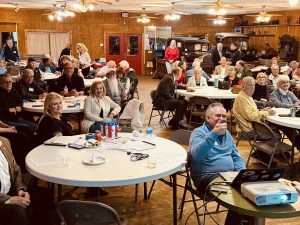 primary elections remain open and be closed? I approached it as an educational opportunity focusing on a complex issue. Two competing bills to close SC’s primary elections have been heard by a House panel with no action. Senate leadership has signaled that neither bill will be taken up by them if they pass the House, and Gov. McMaster says he will veto any closed primary bill if it gets to his desk. If you want a better understanding of the issue, I recommend you read the Op-Ed written by two of my legislative colleagues in this week’s Post & Courier.
PHOTO OF THE WEEK
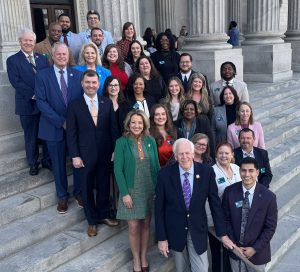
Aiken County Legislators welcomed the 2026 Aiken Leadership Class to the State House this week. Their class project this year is to support the Aiken Salvation Army by raising funds to purchase a minibus to transport children to the Red Shield after-school program and to support initiatives addressing the local homeless challenge.
