
Dear Friends,
Like in any football game, halftime is over for the S.C. General Assembly. The second year of the 126th Legislative Session resumed this week, and expectations are high to tackle critical issues. Why? Because Republicans have a super-majority in both the House and Senate. There is no excuse for not moving forward with their aggressive Conservative agenda to propel our state forward.
Cutting Red Tape and Ending Overregulation
Government overreach hurts small businesses, limits job creation, and slows our economy.
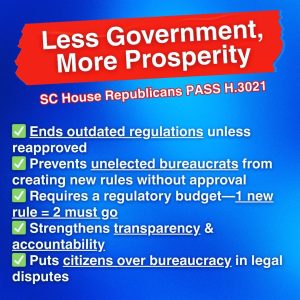 To demonstrate the critical importance of making SC a national leader in business-friendly policies, and not a state with excessive regulations that stifle growth, legislative leaders, Senators, and Representatives came together Thursday to promise swift action in passing the Regulatory Freedom Act (H.3021) — which puts citizens and businesses, not unelected bureaucrats, back in charge.
The House unanimously passed the bill last year. Now, it’s the Senate’s turn.
The ‘Americans for Prosperity’ organized the State House news conference. They state: “The Small Business Regulatory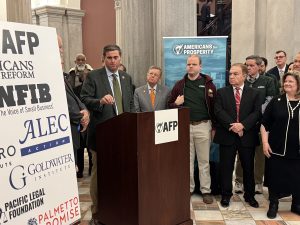 Freedom Act will give legislators an opportunity to analyze and potentially stop regulations that would be overly burdensome. Under the bill, any rule with an economic impact that is greater than or equal to $1 million over any 5-year period would trigger this legislative process.”
In SC, over 80,000 regulations exist, amounting to more than 5 million words. These regulations create “mounds of red tape” that roadblock entrepreneurialism and small businesses. This bill supports small businesses by reducing regulatory burdens. It’s time it crosses the finish line.
Bathroom Privacy Bill
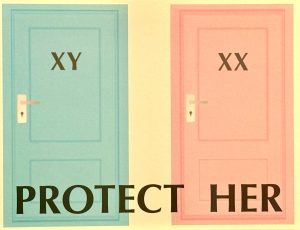 Protecting school-age children was the focal point of a House hearing this week that drew significant attention. The proposed legislation requires K-12 public school students to use bathrooms and locker rooms corresponding to their biological sex at birth. The 60 sponsors, including me, believe this is common sense.
The bill (H.4756) largely mirrors a law that’s been part of the state budget since 2024. In addition to making those rules permanent state law, the proposal would extend them to public colleges. The penalty would be the same as the budget law – school districts and colleges risk losing up to 25% of their state aid for violations.
Of course, the wacky ACLU opposes both the existing budget rule and the proposed legislation, arguing it stigmatizes transgender children and adults and opens everyone to scrutiny of their gender. The bill’s sponsors know this is not a debate over discrimination but one of privacy and safety for female students.
Rep. Fawn Pedalino said it best, “For generations, restrooms, locker rooms, and overnight trips have been separated by sex, not because it was political, but because it’s common sense. This is not about targeting anyone. It’s about setting firm statewide standards.”
No vote was taken. A second public hearing is planned for next Tuesday.
Reclassifying Abortion Drugs
Republican Representatives advanced a bill in a subcommittee that would further restrict abortion access in SC by classifying medication abortion drugs as controlled substances. The bill (H.4760) particularly takes aim at the mail delivery of abortion pills. It’s already illegal for abortion pill providers in SC to mail the two pills that end a pregnancy. In SC, abortion drugs must be handed over at the clinic.
The bill classifies mifepristone and misoprostol as Schedule IV drugs, making possession legal only with a prescription. Violations could carry fines of up to $5,000 and prison sentences of up to five years, with stiffer penalties for providing the drugs without a pregnant woman’s knowledge. The bill bars the prosecution of women who possess the drugs for their own use.
The proposal passed a House Judiciary subcommittee on a 3–2 party-line vote and now heads to the full House Judiciary Committee, where it is certain to win approval.
The Draconian Abortion Bill
I’ll briefly mention this bill because it goes too far, and only the ardent anti-abortion legislators support it. The Judiciary sub-committee briefly heard testimony on a second bill (H.3537) that intentionally punishes women for having an abortion by extending all legal protections to the womb from fertilization. Abortion would be legally on par with murder.
The ‘Prenatal Equal Protection’ is sponsored by Rep. Rob Harris of Spartanburg County, the father of 10 and a member of the hardline Freedom Caucus. He said he wants to end abortions by erasing women’s “complete immunity” from prosecution, stating that “Murdering anyone should be illegal for everyone.”
A companion bill was introduced in the Senate on Tuesday by Sen. Lee Bright shortly after he was sworn into office after winning a special election in December. At a news conference with Harris ahead of the session’s opening, Bright admitted his bill has a slim chance of passing.
Protecting SC’s Historical Monuments
Finally, there is traction to enhance the South Carolina Heritage Act to protect historical monuments and statues. With little debate, a Senate panel advanced a proposal to expand protections to all memorials on public property in South Carolina.
 Over several sessions, Sen. Danny Verdin and I have introduced companion bills in the House and Senate. The Senate bill (S.508) is sponsored by 29 Republicans; my House bill (H.4260) has 29 sponsors as well. The legislation extends existing protections to all memorials on public property statewide and prohibits the addition of contextual plaques to monuments installed in recent years.
The bill follows disputes over monument removals, including Charleston’s 2020 removal of a statue of John C. Calhoun. History supporters say the law needs strengthening after courts ruled that only the attorney general can enforce it. The proposal would also allow private groups to sue violators of the law to block removals and penalize unauthorized changes.
Republicans on the panel approved the bill with little debate, sending it to the Senate Finance Committee. The panel’s two Democrats did not vote.
Urgent NIL Fix
 The SC House quickly moved this week to shield college athletes from public disclosure of their revenue-sharing contracts, citing safety, privacy, and competitive concerns amid the new NCAA NIL (Name, Image & Likeness) compensation era. NIL provides college athletes with a path to profit from endorsements, appearances, social media, merchandise, camps, and sponsorships.
The House voted 111-2 to exempt revenue-sharing agreements between universities and student-athletes from the state Freedom of Information Act. The bill (4902) heads to the Senate as a Richland County judge prepares to hear a lawsuit seeking disclosure of such contracts at USC.
Under a recent NCAA settlement, schools that opt in may distribute up to $20.5 million annually to athletes beginning in the 2025-26 school year. Supporters of the exemption argue that revealing how much individual athletes are paid could expose them and their families to serious risks.
State Rep. Justin Bamberg warned that publicizing individual compensation could invite extortion or other threats. “That could be very dangerous for them, for their families,” he said.
House Majority Leader Davey Hiott said disclosure would also harm SC schools competitively by allowing rivals to target athletes with higher offers.
Universities argue that the funds come from private revenue sources, such as media deals and ticket sales, and should not be subject to open-records laws. No tax dollars support NIL.
The bill could halt the pending lawsuit if enacted, clarifying that athlete revenue-sharing contracts are not public records.
Veto Override on Gun Charges
The House was nearly unanimous in overriding Gov. Henry McMaster’s veto of a bill dismissing pending charges for unlawful gun possession that were still on the books when the state adopted permit-less carry in 2024. The Senate had already voted unanimously to override the veto late last year, clearing the way for the bill to become law. The measure closes a loophole in the permit-less carry law, which allowed expungement of certain gun convictions. At least 200 people were still facing charges for conduct that is no longer illegal.
Governor Unveils Executive Budget Recommendations
 Governor Henry McMaster unveiled his Executive Budget, which proposes major investments to keep the state competitive, fiscally stable, and prepared for rapid growth. His budget serves as a recommendation to House budget writers.
- Roads & Bridges: Central to the plan is a $1.1 billion infusion of surplus funds to keep road, bridge, and highway projects on schedule as inflation drives up construction and labor costs. Nearly $7 billion in transportation projects are currently underway statewide, a sharp increase from 2017 levels.
- Infrastructure Planning: Recognizing South Carolina’s explosive population growth, the budget also calls for a comprehensive study of the state’s infrastructure and essential services over the next 10 and 20 years. The analysis examines pressures on water and sewer systems, roads, schools, public safety, healthcare, and power generation.
- Fiscal Discipline a Priority: The budget sets aside $1.4 billion for the state’s “rainy day” reserve, maintaining a target of at least 10 percent of General Fund revenues. It also continues income tax relief, lowering the rate from 6 percent to 5.9 percent and extending a tax-cut strategy that has already returned more than $1.2 billion to taxpayers.
- Education Initiatives: The plan raises the minimum starting teacher salary to $50,500, expands eligibility for full day 4K, funds free breakfast for every public school student, and grows school choice scholarships to 20,000 students. College affordability is addressed through a seventh consecutive in-state tuition freeze, increased need-based financial aid, workforce scholarships, and funding for campus maintenance.
- Public Safety Investments: The Governor called for the continued funding for school resource officers, law enforcement pay raises, equipment grants for sheriffs, corrections improvements, and a proposed tax credit for first responders.
- Healthcare: His budget also supports healthcare restructuring, expanding cancer treatment, land conservation, and disaster relief preparedness.
SC BOOMING!
The SC Department of Commerce released its 2025 industry recruitment results, marking a milestone for rural economic development. During 2025, SC announced a total capital investment of $9.12 billion, representing the third-highest year for industry recruitment on record and more than 8,100 new jobs. Rural recruitment of both capital investment and new jobs accounted for more than 40% of the overall total — the highest share since 2010. Of the 82 total announced projects, 34 chose rural communities, ensuring long-term opportunities across every region of the state.
PHOTOS OF THE WEEK
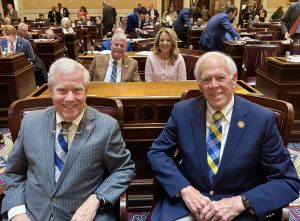 Hey Aiken County — your Republican members of the SC House of Representatives are eager to have a productive session as we kicked off the second year of the 126th session. (Pictured: Bill Hixon, Bill Taylor, Charlie Hartz, Melissa Oremus)
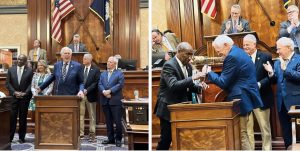
A moment of celebration & fun on the floor of the SC House of Representatives Thursday. The Aiken Delegation surprised our colleague, Rep. Bill Clyburn, in celebrating his 62nd wedding anniversary. He and Beverly were students at USC in 1964 when they married. The love birds have both been dedicated educators and public servants.
It was my privilege to lend a helping hand to the Mitchum family of Aiken County during their participation in a legislative breakfast hosted by the Bleeding Disorders Association of SC. They are determined to get legislative approval to ban co-pay accumulators in SC, so their enormously expensive prescription drugs are affordable.
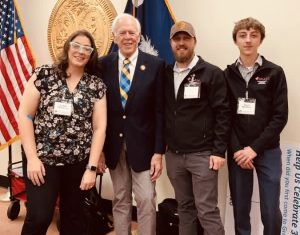
During the first week of SC’s legislative session, we welcomed grassroots leaders of the Convention of States (CoS) who came to the State House from across the state. It was their annual surge day, during which they met with legislators to advance common-sense legislation, such as parental rights legislation.
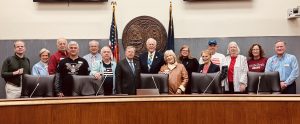
The ALEC (American Legislative Exchange Council) legislative team visited the State House this week. They joined legislative leaders and allies in support of regulatory reform efforts across South Carolina. By cutting red tape, small businesses can thrive when allowed to innovate.
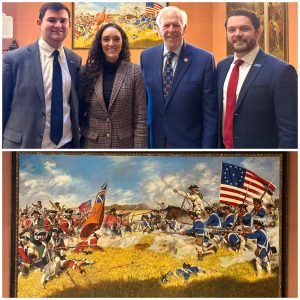 ALEC, a major Conservative think tank, is regularly highlighting America’s 250th birthday. That gave me the opportunity to provide them with a history lesson on the Battle of Cowpens, which today marks the 245 years since the pivotal Revolutionary War battle in South Carolina. That victory sealed the American victory, sending Lord Cornwallis’ British Army to Yorktown, where they surrendered to Gen. George Washington.
(Note: A bit of family pride on our part – my great-grandfather, Lewis Wells, a member of the SC Militia, helped defeat the Red Coats in that battle. He was in Col. Branon’s Fair Forest Regiment, the first to engage the enemy.)
